Federally Funded
SNAP is funded by the federal government through the USDA's Food and Nutrition Service (FNS), which sets eligibility rules and benefit levels nationwide.
The Supplemental Nutrition Assistance Program (SNAP) — still widely called food stamps — is America's largest and most effective hunger-relief program. Each month it helps over 41 million people afford the groceries they need to stay healthy.
SNAP stands for the Supplemental Nutrition Assistance Program, formerly known as food stamps. It provides monthly food benefits to low-income families so they can afford the nutritious food essential to health and well-being.
SNAP is funded by the federal government through the USDA's Food and Nutrition Service (FNS), which sets eligibility rules and benefit levels nationwide.
Each state runs its own program — issuing EBT cards, approving applications, and loading monthly benefits. That's why names differ: CalFresh in California, Link in Illinois, and more.
Benefits load onto an Electronic Benefit Transfer (EBT) card that works like a debit card at grocery stores, convenience stores, farmers markets, and online retailers.

Food insecurity remains elevated across the country. SNAP is designed as a counter-cyclical program — participation automatically expands during economic downturns and shrinks as need declines.
Anyone can lose a job, become sick, or need to care for a child or family member. SNAP is there to help people afford the food they need to stay healthy and get back on their feet.
SNAP is for people with low incomes — families with kids, older adults, people with disabilities, and single individuals. Eligibility depends on your household size, income, expenses, and where you live.
Most households must have gross monthly income at or below 130% of the federal poverty line. In 2027, a household of one typically needs to earn about $2,660 or less per month before taxes, though some states use a lower limit of $1,729. Households with an elderly or disabled member may qualify under a higher net-income limit instead.
Some households must also pass an asset test. Many deductions lower your counted income — including housing costs, dependent care, child support paid, and out-of-pocket medical expenses over $35 per month for seniors and people with disabilities. Claiming every deduction can raise your monthly benefit significantly.
Adults ages 18 to 64 without dependents generally must register for work and accept suitable job offers. Able-bodied adults without dependents are typically limited to three months of benefits out of every three years unless they meet additional work rules or qualify for an exemption.
Adults age 60 and older may qualify more easily and are exempt from work requirements. The average benefit for a one-person senior household is about $188 per month — roughly $2,256 per year. Yet over half of eligible seniors are not enrolled.
Only 55% of eligible elderly individuals were enrolled in SNAP in FY2022, compared with 88% of all eligible people. Many believed their benefit would be too small or didn't know they qualified. It costs nothing to find out — and the average eligible senior leaves thousands of dollars in groceries on the table each year.
| Household Size | Maximum Monthly Allotment (FY2026, 48 States + DC) | Average Actual Benefit |
|---|---|---|
| 1 person | $298 | ~$188 / month |
| 2 people | $546 | ~$353 / household |
| 3 people | $785 | Varies by income |
| 4 people | $994 | Varies by income |
| Each additional | +$219 | Varies by income |
Alaska, Hawaii, Guam, and the U.S. Virgin Islands have higher maximum allotments. Alaska ranges from $1,285–$1,995 for a family of four; Hawaii is $1,689. Amounts adjust every October for cost of living.
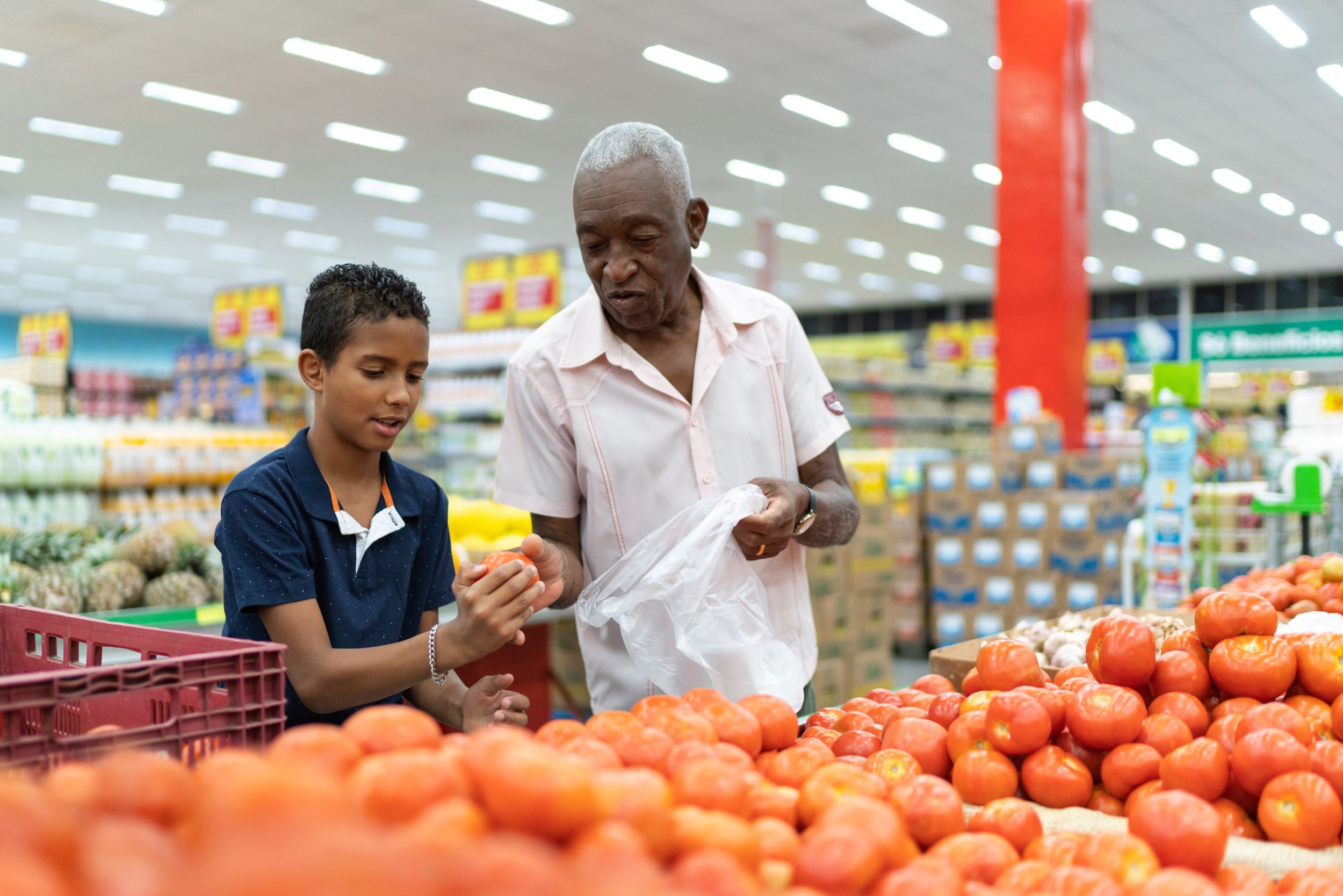
While providing a critical safety net for neighbors in need, SNAP also supports jobs and small businesses. Grocery stores and farmers markets that accept SNAP contribute to local tax bases that fund schools, roads, and health care.
You can apply for food stamps online, by mail, by phone, or in person at your state or local SNAP office. Most states now offer a fully online application.
Every state runs its own program. Search for "food stamp office near me" or use the USDA SNAP state directory to find your local agency and application portal.
You'll typically need proof of identity, proof of income (pay stubs, SSI letters, benefit award letters), and proof of housing or utility expenses.
Complete the food snap application online, by mail, by fax, or in person. You can also apply on behalf of someone else if you're helping a family member.
Your state will schedule a phone or in-person SNAP interview. Be ready to answer questions about your household, income, and expenses, and to provide extra documents if requested.
You should hear back within 30 days. If approved, you'll get an approval letter listing your monthly amount and your EBT card in the mail. Emergency SNAP can start in under a week.
Takes about 2 minutes • No cost • No obligation
Your EBT card works like a debit card — but only for eligible groceries. Here's the breakdown of what's approved and what isn't.
Participating grocery stores, convenience stores, supermarkets, and thousands of farmers markets nationwide accept SNAP EBT.
Many states now allow EBT online shopping at major retailers and local grocers — including Amazon, Walmart, and Target in approved states.
Use the USDA SNAP retailer locator to find stores near you that accept EBT food stamps, or check your state's EBT app.
Once approved, keeping your account current is the key to keeping your benefits flowing.
Report changes in income, expenses, or household size to your local SNAP office within 10 days. Also update your contact information right away so you never miss a notice.
Check your balance on your store receipt, through your state's EBT app or portal, or by calling your state's EBT customer service number on the back of your card.
SNAP benefits require recertification every 6 to 12 months depending on your state. Missing your recertification deadline can end your benefits even if you're still eligible.
Change your EBT card PIN every month, especially before your benefits deposit. Skimming and card cloning are on the rise — protecting your PIN is your best defense.
Use your EBT card at least once every three months. Benefits can expire from your account if the card goes unused for too long.
Contact your state's EBT customer service line immediately if your card is lost or stolen. Many states can replace stolen benefits if you report quickly.
Recent federal legislation made significant changes to SNAP that will reduce program spending by an estimated $187 billion (17%) over ten years. Here's what that means for you.
The USDA can no longer factor in current food prices, consumption patterns, or dietary guidance when updating the Thrifty Food Plan that sets maximum benefits. Adjustments are limited to annual inflation indexing — which the CBO projects will lower average monthly benefits over time.
Work requirements now extend to able-bodied adults ages 55 to 64, veterans, people experiencing homelessness, and young adults who were in foster care at 18. Rules now apply to all adults age 18 to 64. The CBO projects roughly 300,000 fewer participants.
States can no longer waive work requirements for areas lacking sufficient jobs. Only the high-unemployment-rate criterion (above 10%) remains available for waivers.
Starting in 2028, states with error payment rates above 6% must pay at least 5% of the cost of their state's SNAP benefits — projected to shift roughly $35 billion in costs to states.
Some participants will no longer be able to deduct certain energy and internet expenses from their income when calculating SNAP benefit amounts.
Eligibility is now limited to citizens, green card holders, Cuban or Haitian entrants, and people in the U.S. under the Compact of Free Association.
Each state runs its own SNAP program, so when changes take effect — and exactly what they look like — varies by where you live. Some states have received extensions. Check with your local SNAP office to learn your state's timeline, and make sure your recertification is filed on time.
If you qualify for SNAP, you may also be eligible for these programs — they can make a big difference for your family's budget.
Nutrition benefits for pregnant and postpartum women and children under five, including specific healthy foods and breastfeeding support.
Children in SNAP households typically qualify for free school breakfast and lunch, plus Summer EBT grocery benefits when school is out.
Temporary Assistance for Needy Families provides monthly cash assistance to families with children — sometimes called cash EBT or welfare.
Free or low-cost health coverage for low-income people and families. SNAP eligibility often aligns with Medicaid eligibility.
SNAP households may qualify for reduced-cost internet service and, in some cases, free devices through federal connectivity programs.
Many museums and zoos offer free or reduced admission to EBT cardholders, along with discounts on memberships and utilities.
Not sure where to start? Call 211 or visit 211.org for local resources including housing help, food pantries, and job training.
Check All Benefits You Qualify For →Answers to the questions people ask most about food stamps and EBT.
Yes. "Food stamps" was the program's original name, and the paper stamps were replaced by Electronic Benefit Transfer (EBT) cards decades ago. In 2008 the program was officially renamed the Supplemental Nutrition Assistance Program (SNAP). Many people still say "food stamps," and some states use their own brand names — CalFresh in California, Link in Illinois, and 3SquaresVT in Vermont, for example.
In 2025, the average SNAP household received about $353 per month, and benefits averaged roughly $188 per person across 42.4 million participants. Your exact amount depends on your household size, net income after deductions, and where you live. For fiscal year 2026, the maximum allotment for a family of four in the 48 contiguous states and D.C. is $994 per month.
The USDA sets maximum benefits by household size using its Thrifty Food Plan. It then determines your net income (after deductions like housing and dependent care) and subtracts 30% of that net income from the maximum benefit. For example, if your net income is $500 per month, $150 is subtracted from the maximum allotment. In 2023, 36% of SNAP households received the maximum benefit.
Yes — most states let you submit a food snap application online through their SNAP office portal. Depending on your state you may also apply by mail, by phone, or in person. After applying, you'll typically need to complete a phone or in-person interview before a decision is made.
Standard processing takes up to 30 days from the date you apply. If you qualify for emergency SNAP (also called expedited benefits), your benefits can be issued in as little as 7 days. Emergency eligibility is generally based on very low income and limited resources.
An EBT (Electronic Benefit Transfer) card is a debit-style card your state issues once you're approved. Your monthly benefit amount is loaded onto the card automatically on the same date each month. You swipe or insert it at authorized retailers to pay for eligible groceries, and you can check your balance on receipts, through your state's app, or by calling your state's EBT customer service number.
Adults age 60 and older are exempt from SNAP work requirements. People with disabilities may also qualify for exemptions. However, under new rules, able-bodied adults ages 55 to 64 without dependents may now need to work, volunteer, or participate in a SNAP Employment and Training program for 80 hours per month. Veterans are no longer automatically exempt.
Some non-citizens may qualify, but eligibility is limited to certain groups — including green card holders, Cuban or Haitian entrants, refugees, and people in the U.S. under the Compact of Free Association. Undocumented immigrants are not eligible for SNAP. Rules have tightened recently, so check with your state SNAP office about your specific status.
Contact your state's EBT customer service number immediately — it's usually printed on the back of your card and listed on your state SNAP office website. Reporting quickly is important: many states can replace stolen benefits, but only within a limited window. Change your PIN every month to reduce your risk of EBT theft.
Yes. Depending on your state and household circumstances, you'll need to recertify your SNAP benefits every 6 to 12 months. You may also need to submit a periodic report. Missing a recertification deadline can end your benefits even if you still qualify, so mark the date and respond as soon as you receive your notice.
Quick links to the information people search for most.
Millions of eligible Americans never apply — because they assume they earn too much or that the benefit wouldn't be worth it. Don't leave groceries on the table. Check your eligibility today.